Chrysler’s Strategic Reinvention in the U.S. Auto Market: Electrification, Identity, and the Road Ahead
In recent years, Chrysler has found itself at a pivotal crossroads in the United States automotive industry. Once a cornerstone of American car manufacturing and innovation, the brand has experienced a period of contraction, with a limited lineup and evolving identity under its parent company, Stellantis. However, as the automotive sector rapidly shifts toward electrification, sustainability, and advanced mobility solutions, Chrysler is positioning itself for a significant transformation. This reinvention may ultimately redefine the brand’s role in the U.S. market and determine its long-term relevance.
A Legacy Brand Facing Modern Pressures
Chrysler’s legacy in the United States is substantial. Founded in 1925, the brand has contributed to major automotive innovations, from early aerodynamic designs to the introduction of the modern minivan. Yet, over the past decade, Chrysler’s product portfolio has narrowed considerably. As of the mid-2020s, the brand primarily relies on just two models: the Chrysler Pacifica minivan and the Chrysler 300 sedan, the latter of which is nearing the end of its production lifecycle.
This reduced lineup reflects broader challenges. Consumer preferences have shifted heavily toward SUVs and crossovers, while competition has intensified from both traditional automakers and new entrants such as Tesla and Rivian. At the same time, regulatory pressure and environmental concerns have accelerated the transition toward electric vehicles (EVs), forcing legacy brands like Chrysler to adapt quickly.
Electrification as a Strategic Pivot
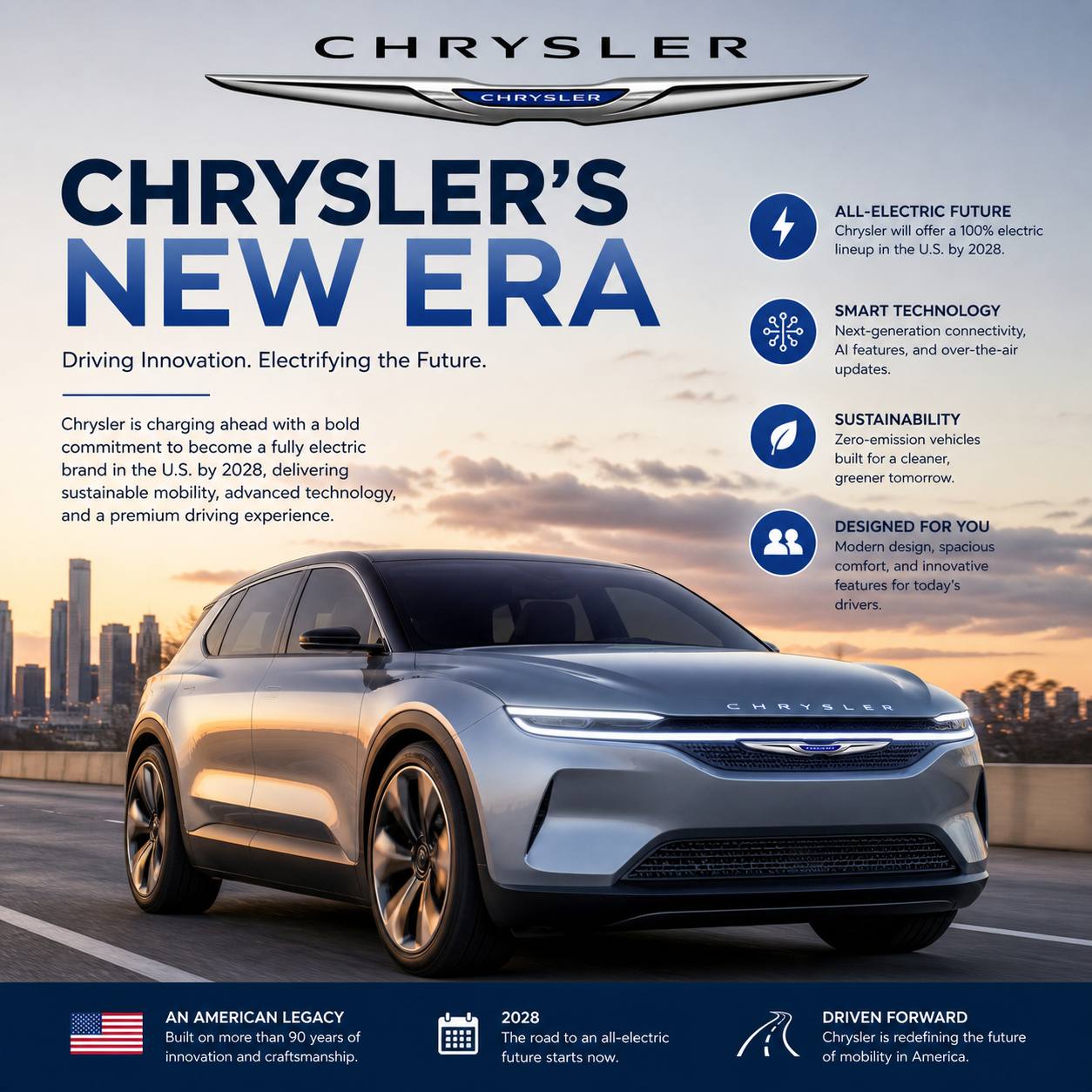
The most significant “new topic” surrounding Chrysler today is its ambitious commitment to electrification. Stellantis has announced plans for Chrysler to become a fully electric brand by 2028 in the United States. This bold strategy aligns with global trends and regulatory requirements, but it also represents a dramatic departure from Chrysler’s recent identity.
Central to this transition is the Chrysler Airflow concept, first unveiled as a vision for the brand’s electric future. The Airflow is not just a new vehicle—it symbolizes Chrysler’s broader repositioning. Designed as a sleek, technology-focused electric crossover, it incorporates advanced connectivity, autonomous driving features, and a minimalist interior experience tailored to modern consumers.
The Airflow concept reflects several key priorities:
Sustainability: Zero-emission electric powertrains.
Technology integration: Over-the-air updates, AI-driven personalization, and seamless digital ecosystems.
Design evolution: A move toward clean, aerodynamic styling that departs from Chrysler’s traditional aesthetic.
If successfully brought to production, vehicles like the Airflow could reposition Chrysler as a forward-thinking, tech-oriented brand rather than a legacy automaker relying on nostalgia.
Challenges in Execution
While Chrysler’s electrification strategy is ambitious, execution will be critical. The U.S. EV market is becoming increasingly competitive, with established players like Tesla dominating market share and traditional automakers such as Ford, General Motors, and Hyundai rapidly expanding their electric offerings.
Chrysler faces several key challenges:
Brand Perception: Many consumers currently associate Chrysler with minivans rather than innovation. Changing this perception will require strong marketing and compelling products.
Product Timing: Delays in launching new EV models could result in lost market opportunities as competitors move faster.
Dealer Network Adaptation: Transitioning to EVs requires significant investment in infrastructure, training, and customer education.
Technological Differentiation: Chrysler must offer unique features or value propositions to stand out in a crowded EV landscape.
Addressing these challenges will determine whether Chrysler’s transformation is successful or merely aspirational.
Reimagining the Customer Experience
Another emerging topic in Chrysler’s evolution is its focus on redefining the customer experience. Modern car buyers increasingly expect more than just transportation—they want connectivity, personalization, and integration with their digital lives.
Chrysler’s future strategy emphasizes:
Software-defined vehicles: Cars that improve over time through updates.
Subscription-based features: Offering optional services such as advanced driver assistance or infotainment upgrades.
User-centric design: Interfaces that prioritize ease of use and customization.
This approach aligns with broader industry trends and could help Chrysler attract younger, tech-savvy consumers who may not have previously considered the brand.
The Role Within Stellantis
Chrysler’s future is also closely tied to its position within Stellantis, the multinational automotive group formed by the merger of Fiat Chrysler Automobiles (FCA) and PSA Group. Within this large portfolio of brands, Chrysler must carve out a distinct identity to avoid redundancy.
Stellantis appears to be positioning Chrysler as a premium mainstream electric brand—a step above mass-market offerings but below luxury marques like Maserati. This positioning could allow Chrysler to compete with brands such as Buick, Volkswagen, and certain trims of Ford and Hyundai, provided it delivers strong design, technology, and value.
Additionally, Stellantis’ global resources—including shared EV platforms, battery technology, and software development—could give Chrysler a competitive advantage if leveraged effectively.
Opportunities in the U.S. Market
Despite its challenges, Chrysler has several opportunities to capitalize on:
Growing EV demand: U.S. consumers are increasingly adopting electric vehicles, supported by government incentives and expanding charging infrastructure.
Brand recognition: Chrysler remains a well-known name, which can be revitalized with the right products.
Minivan leadership: The Pacifica, especially its plug-in hybrid version, provides a bridge to full electrification and maintains a strong niche presence.
If Chrysler can successfully translate these advantages into compelling EV offerings, it could reestablish itself as a relevant and competitive player.
Looking Ahead
The next few years will be decisive for Chrysler in the United States. The transition to an all-electric lineup is not merely a technological shift—it represents a fundamental reinvention of the brand’s identity, market position, and relationship with consumers.
Success will depend on several factors:
Delivering innovative, high-quality electric vehicles on schedule.
Effectively communicating a new brand vision.
Competing on both technology and value in a crowded market.
Leveraging Stellantis’ global capabilities without losing a distinct American identity.
In many ways, Chrysler’s journey mirrors the broader transformation of the automotive industry. As legacy brands navigate the shift toward electrification and digitalization, those that adapt successfully will shape the future of mobility.
For Chrysler, the stakes are particularly high. The brand has the opportunity to move from a period of decline to a new era of relevance—one defined not by its past achievements, but by its ability to innovate and meet the demands of a rapidly changing world.