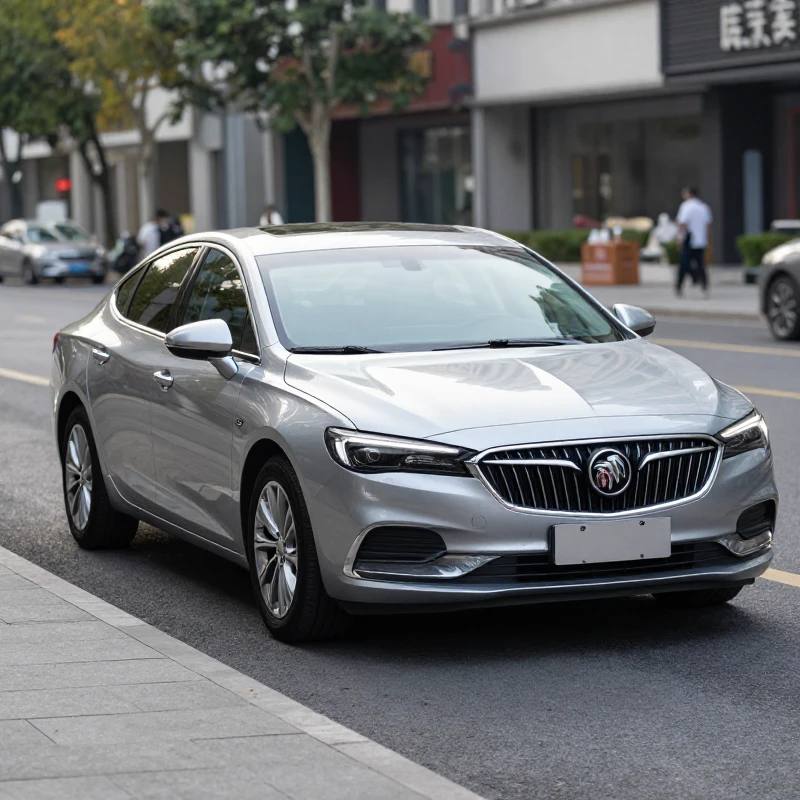
Buick’s Reinvention in the United States: Quiet Luxury Meets Electrification
For much of its history, Buick has occupied a unique space in the American auto market—positioned between mainstream brands like Chevrolet and premium marques like Cadillac. However, in recent years, Buick has been undergoing a significant transformation in the United States, reshaping its identity to stay relevant in a rapidly changing automotive landscape. The brand’s newest direction centers around modern design, quiet luxury, and a gradual transition toward electrification, all while appealing to a younger and more diverse audience.
A Shift Toward a Younger Audience
Historically, Buick had a reputation as a brand favored by older drivers. This perception became a challenge, especially as younger buyers gravitated toward more tech-focused and stylish competitors. Recognizing this, Buick has made a deliberate effort to rebrand itself.
In the U.S., Buick’s recent lineup—such as the Encore GX, Envista, and Envision—reflects a sportier, more contemporary design language. These vehicles feature sleeker silhouettes, bold grilles, and modern interiors with digital displays. The introduction of the Buick Envista, in particular, signals a move toward a more fashion-forward, coupe-inspired SUV design at an affordable price point. This strategy is aimed at attracting first-time buyers and younger professionals who want premium features without paying luxury-brand prices.
The Rise of “Quiet Luxury”
One of Buick’s defining themes in its reinvention is “quiet luxury.” Rather than competing directly with high-end brands on performance or prestige, Buick emphasizes comfort, smoothness, and refinement. This includes:
Noise-reduction technologies (like active noise cancellation)
Softer suspension tuning for smoother rides
Clean, minimalist interior design
User-friendly infotainment systems
This approach aligns with a broader trend in the U.S. market where some consumers are shifting away from flashy luxury toward more subtle, understated experiences. Buick is positioning itself as a brand that delivers premium comfort without being overly expensive or ostentatious.
SUV-Focused Lineup
Another major development in Buick’s U.S. strategy is its complete shift to SUVs. Buick no longer sells sedans in the United States; instead, it focuses entirely on crossover SUVs. Its current lineup includes:
Encore GX (subcompact SUV)
Envista (entry-level crossover coupe)
Envision (compact SUV)
Enclave (mid-size three-row SUV)
This move reflects broader consumer trends in the U.S., where SUVs dominate sales due to their practicality, higher driving position, and versatility. Buick’s SUVs are designed to balance affordability with upscale features, making them appealing to families and urban drivers alike.
Electrification and the Future
One of the most important “new topics” surrounding Buick in the U.S. is its transition toward electric vehicles (EVs). General Motors (Buick’s parent company) has committed to an all-electric future, and Buick is expected to follow that path.
Buick has already introduced EV concepts and electric models in China, and similar vehicles are expected to reach the U.S. market. The brand has hinted that its future lineup will include stylish, tech-forward EVs built on GM’s Ultium platform. These vehicles are expected to emphasize:
Long driving range
Fast charging capabilities
Advanced driver-assistance systems
Sleek, futuristic designs
Although Buick’s EV rollout in the United States has been slower compared to some competitors, the brand is positioning itself to offer electric vehicles that maintain its core identity—quiet, smooth, and comfortable driving experiences.
Global Influence, Especially from China
An interesting aspect of Buick’s evolution is its strong connection to the Chinese market. Buick is extremely popular in China, often selling more vehicles there than in the United States. As a result, many of Buick’s design and technology innovations are influenced by global trends, especially those coming from China.
This global perspective benefits U.S. consumers, as it allows Buick to incorporate advanced features and stylish designs that might not traditionally come from a mid-tier American brand. However, it also presents a challenge: ensuring that vehicles tailored for international markets still meet the preferences of American buyers.
Technology and Connectivity
Modern Buick vehicles in the U.S. are increasingly focused on technology. Features that were once reserved for luxury brands are now becoming standard or widely available in Buick models, including:
Large touchscreen infotainment systems
Wireless Apple CarPlay and Android Auto
Digital instrument clusters
Advanced safety systems like lane-keeping assist and adaptive cruise control
These upgrades are essential for attracting younger buyers who expect seamless connectivity and intuitive tech in their vehicles. Buick’s strategy is to deliver these features at a competitive price point, making them accessible without stepping into luxury-brand territory.
Competitive Positioning
Buick’s biggest challenge in the United States is defining its position in a crowded market. It competes with:
Mainstream brands (Toyota, Honda, Hyundai)
Near-luxury brands (Mazda, Volkswagen)
Entry-level luxury brands (Acura, Lexus)
To stand out, Buick is focusing on value—offering more premium features than mainstream brands while remaining more affordable than traditional luxury competitors. This “in-between” positioning can be tricky, but it also gives Buick a unique niche if executed well.
Challenges Ahead
Despite its progress, Buick still faces several challenges in the U.S. market:
Brand perception – Changing long-held views about Buick being an “older person’s brand” takes time.
Strong competition – The SUV segment is highly competitive, with many brands offering similar features.
EV transition timing – Buick needs to accelerate its electric vehicle rollout to stay competitive as the market shifts.
Dealer network and visibility – Compared to some competitors, Buick has fewer standalone dealerships, often sharing space with GMC.
Addressing these challenges will be key to Buick’s long-term success in the United States.
Conclusion
Buick’s new direction in the United States represents a significant transformation. By focusing on modern design, quiet luxury, SUV practicality, and future electrification, the brand is working to redefine itself for a new generation of drivers. While it still faces challenges, Buick’s evolving identity shows that it is not simply relying on its legacy—it is actively adapting to the future of the automotive industry.