BMW car engines stand out for blending thrilling performance with impressive efficiency through smart engineering. BMW’s approach, centered on the Efficient Dynamics strategy, optimizes power delivery, reduces fuel consumption and emissions, and maintains the brand’s “Ultimate Driving Machine” character. Here are five key features that define this innovation.
1. TwinPower Turbo Technology
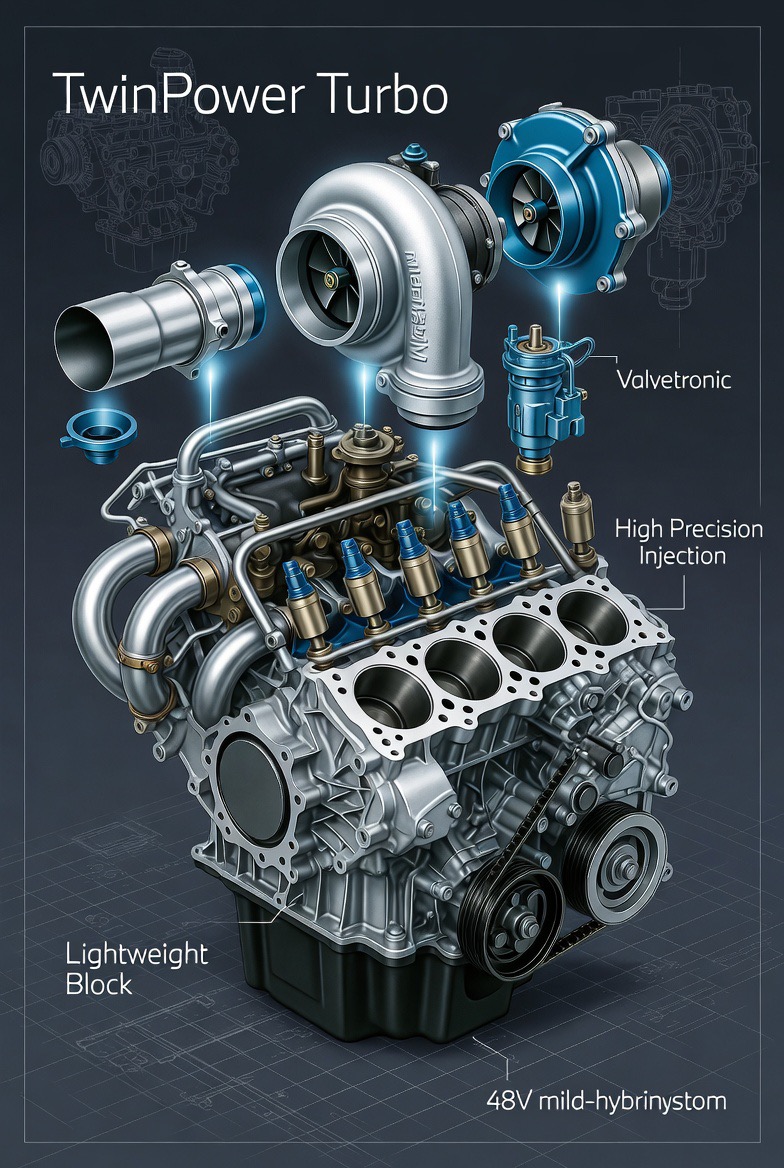
BMW’s TwinPower Turbo (often with a single turbocharger featuring twin-scroll design) is a cornerstone of modern BMW engines. It uses two separate exhaust gas inlets (scrolls) to minimize turbo lag, delivering quick response and strong low-end torque.
Combined with High Precision Injection (direct fuel injection), Double VANOS (variable camshaft timing), and often Valvetrain (variable valve lift), these engines extract maximum energy from each drop of fuel. This results in high power from smaller displacements—e.g., a 2.0L four-cylinder or 3.0L inline-six feeling like larger engines—while improving fuel economy and reducing emissions. Twin-scroll designs enhance efficiency across petrol and diesel units.
2. Valvetronic Variable Valve Lift System
Valvetronic replaces the traditional throttle plate with fully variable intake valve lift control. This allows precise regulation of airflow into the cylinders without pumping losses associated with throttling.
Benefits include:
• Smoother power delivery
• Better fuel efficiency (especially at part loads)
• Reduced emissions
It works seamlessly with Double VANOS for optimized valve timing across RPM ranges. This technology has been refined over generations and contributes significantly to BMW engines’ reputation for responsiveness and efficiency.
3. Efficient Dynamics Suite and Energy Management
Efficient Dynamics is BMW’s holistic approach to minimizing energy waste while maximizing dynamics. Key elements in engines and vehicles include:
• Auto Start-Stop: Shuts off the engine at idle (e.g., in traffic) and restarts seamlessly.
• Brake Energy Regeneration: Captures kinetic energy during braking to charge the battery, reducing alternator load.
• ECO PRO mode, coasting function, and intelligent driving assistants that optimize powertrain behavior.
These features, combined with lightweight engine construction (aluminum blocks/heads, magnesium components), deliver real-world efficiency gains without sacrificing performance.
4. Lightweight Construction and Advanced Materials
BMW prioritizes reducing engine and vehicle weight using aluminum, magnesium alloys, and carbon fiber reinforced plastics (CFRP) where appropriate. Lighter engines improve overall vehicle balance (often near-perfect 50:50 distribution), handling, and efficiency.
Lower mass means less energy is needed for acceleration, while optimized designs (e.g., hollow camshafts, reduced internal friction) further boost thermal and mechanical efficiency. This approach supports both traditional combustion engines and hybrid integrations.
5. Mild-Hybrid and Electrified Powertrain Integration
Modern BMW engines frequently incorporate 48V mild-hybrid systems, adding a small electric motor/assist for:
• Smoother start-stop
• Torque fill during acceleration
• Coasting with the engine off
• Improved overall efficiency and emissions performance.
BMW also offers plug-in hybrids (e.g., in M models) that combine TwinPower Turbo engines with powerful electric motors for impressive system outputs and electric-only driving capability. This bridges performance and sustainability, with ongoing advancements like the Miller combustion process for better efficiency in newer units.
In summary, BMW engines excel by integrating forced induction, variable valve technologies, intelligent energy recovery, lightweight design, and electrification. These features allow smaller, more efficient powerplants to deliver the power, refinement, and driving joy BMW drivers expect—while meeting stringent efficiency and emissions standards.
Whether in a 3 Series, X5, or high-performance M model, these innovations keep BMW at the forefront of automotive engineering. Technologies continue evolving toward greater hybridization and sustainability.