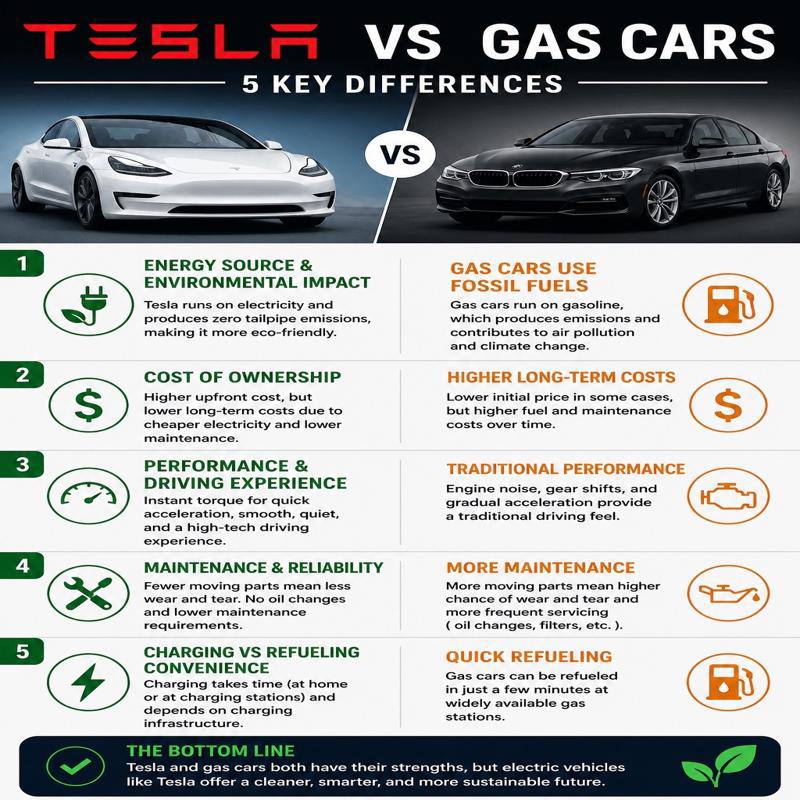
Tesla vs Gas Cars: 5 Key Differences
As the automotive world shifts toward electric vehicles, understanding the differences between Tesla (EVs) and traditional gas-powered cars is more important than ever:
Energy Source & Environmental Impact
Tesla vehicles run on electricity, producing zero tailpipe emissions. Gas cars rely on fossil fuels, contributing to air pollution and carbon emissions.
Cost of Ownership
While Tesla vehicles often have a higher upfront cost, they typically offer lower long-term expenses due to reduced fuel and maintenance costs compared to gas cars.
Performance & Driving Experience
Tesla cars deliver instant torque, resulting in faster acceleration and a smoother, quieter ride. Gas vehicles provide a more traditional driving feel with engine noise and gear shifts.
Maintenance & Reliability
Electric vehicles have fewer moving parts, eliminating the need for oil changes and reducing overall maintenance. Gas cars require more frequent servicing.
Charging vs Refueling Convenience
Charging a Tesla can take longer and requires access to charging infrastructure, whereas gas cars can be refueled quickly at widely available stations.
Conclusion:
Both options have their advantages, but Tesla and other electric vehicles represent a significant step toward a more sustainable and technologically advanced future.